Sponsored by

Not a subscriber? Join here for free.
🏄🏾♂️ Fibre F5: Australia’s Electric Hydrofoil
Fibre Boats has opened an AUD $5 million raise to scale the Fibre F5, a 5.5-metre electric hydrofoil that the company bills as Australia’s first locally designed and manufactured electric hydrofoil boat. The raise matters because the F5 sits in one of the most interesting corners of electric marine: not large ferries, not e-foils, but a compact recreational boat that uses foiling to solve the problem that has held back many electric boats — drag.
The F5’s core idea is simple. Instead of pushing a hull through the water at speed, the boat rises onto retractable hydrofoils. Once lifted, less hull surface touches the water, reducing resistance and cutting the energy needed to cruise. Fibre says hydrofoils can reduce drag and increase efficiency by roughly 75 percent, while The Driven reported Fibre’s claim that hydrofoils can reduce the energy needed to push the boat through water by up to 70 percent.
Marine Business reports the F5 is 5.5 metres long and 2.3 metres wide, carries five people, uses a 60 kWh battery bank, cruises at about 22 knots, reaches a top speed of 35 knots, and offers up to 76 kilometres of range on a charge. The Driven reported a 50 kWh battery, so there is some inconsistency in published battery figures; the 60 kWh number appears in Marine Business and in other market coverage.
The hydrofoils are retractable, which is important for real-world use. At lower speeds, the F5 can operate more like a conventional hull for docking, shallow manoeuvring, and trailering. At speed, the foils lift the boat out of the chop. Fibre co-founder Brent McTigue told The Driven that liftoff occurs at around 17 knots.
That gives the F5 a different proposition from many electric runabouts. The battery is not just there to replace a gas tank. It is paired with a hull form designed to need less energy in the first place. That is the key electric-boat lesson here: the most compelling electric craft often rethink the platform, not just the propulsion system.
Fibre is also positioning the F5 around the softer benefits of electric foiling. The company promotes zero emissions, low noise, and low vibration. The Driven also notes the boat is designed to create negligible wash, which could make it relevant for sensitive waterways, marinas, and lakes where wake and noise are under scrutiny.
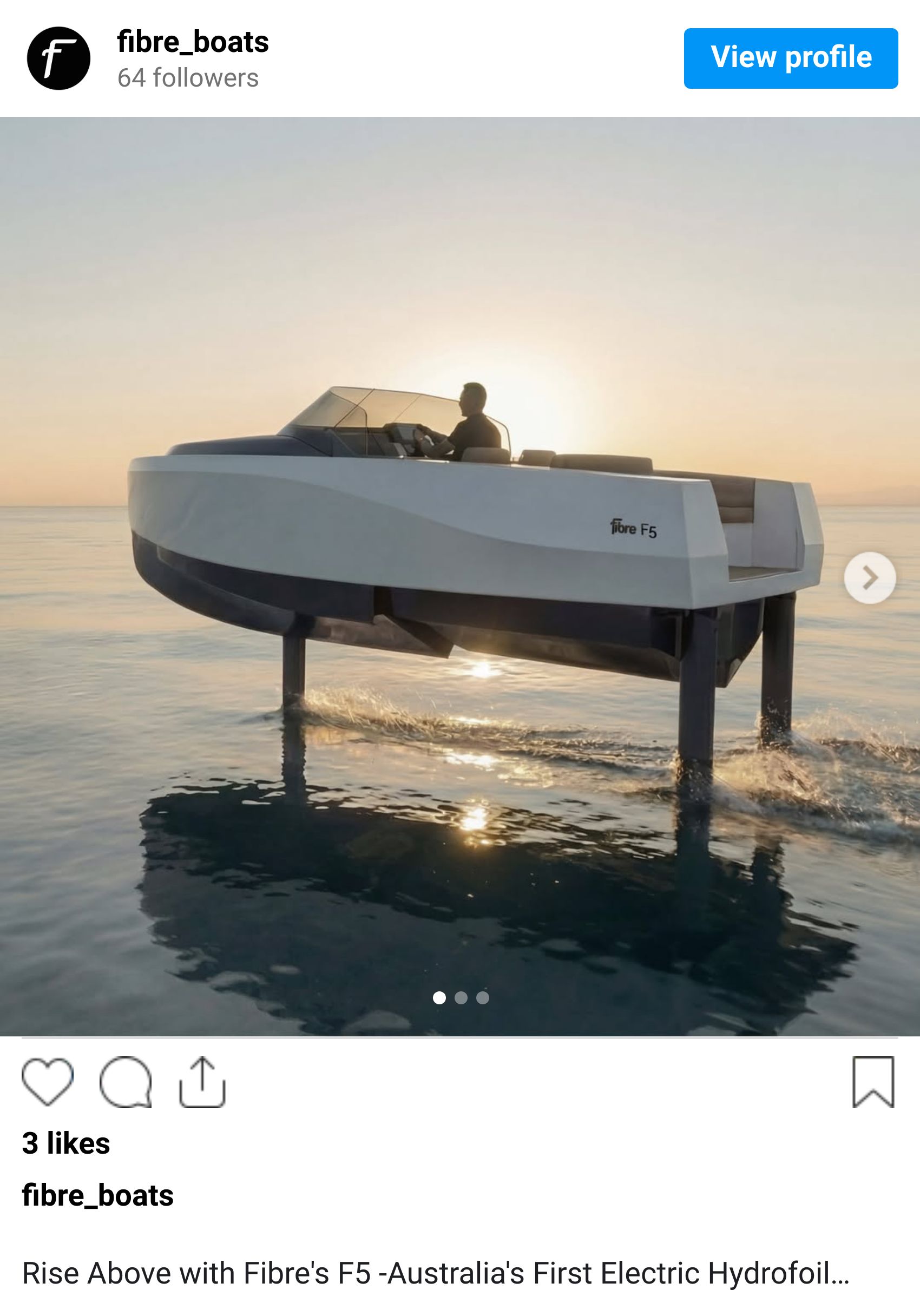
For now, the F5 is best understood as a premium early-adopter boat. It is expensive, technically ambitious, and still moving from launch attention toward scale. But the formula is right: reduce drag first, then electrify. That may be the difference between an electric boat that merely swaps engines and one that changes the experience of being on the water.
Learn more, here.
⚙️ Arc’s First Electric Tug Hits the Water
Arc’s electric tugboat program has moved from announcement to steel in the water.
The company posted that Tuuli C, the first of eight hybrid-electric tugboats being built for Curtin Maritime, has splashed at Snow & Company in Seattle. Batteries and powertrain installation are next, with sea trials planned for the fall before the vessel heads to work with Curtin Maritime at the Port of Long Beach.
For electric marine, this is a significant moment. Arc is best known for high-performance recreational boats, including the Arc Sport and Arc Coast. Tugboats are a different category. They are heavy-duty working vessels that spend their days pushing, pulling, and positioning large ships in tight port environments. They need huge bursts of torque, high reliability, and the ability to operate on demanding schedules.
That is why the Arc-Curtin project matters. It is not a concept boat or a low-speed harbour demonstrator. It is part of a $160 million order for eight hybrid-electric ship-assist tugs, with the vessels being built by Snow & Company and equipped with Arc’s vertically integrated electric powertrain. Marine Log reported that the first four vessels are committed for delivery before the end of 2027.
The numbers are large. Each tug is expected to deliver more than 4,000 horsepower and use a 6 MWh battery buffer. Curtin’s published fleet sheet for Tuuli C lists the vessel at 80 feet 9 inches long, 42 feet 3 inches wide, with a 12-foot 6-inch draft, 380 long tons displacement, two 2,000 hp L-drive thrusters, and 55 short tons of bollard pull.
Those specs put Tuuli C in the world of serious harbour work. Bollard pull is the tugboat equivalent of a headline torque number: it measures how much pulling force the vessel can deliver. For ship-assist work, that force matters more than top speed. A tug needs to respond, hold position, and apply power in short, intense operating windows. Electric propulsion is well suited to that profile because electric motors deliver torque from zero rpm and can avoid idling between jobs.
The hybrid-electric label is also important. These tugs are not being presented as small battery-only harbour craft. They are designed around a large electric propulsion system with battery capacity for heavy-duty operations, while retaining backup or supplemental capability for demanding commercial service. For port operators, that may be the practical bridge: electrify the main work cycle first, then use hybrid architecture to protect uptime.
Arc says the tugboats use the same vertically integrated powertrain approach developed for its recreational boats. That means the company is not just supplying a motor. It is bringing together batteries, power electronics, software, controls, and propulsion integration. In a commercial vessel, that system-level approach matters because the boat has to operate as part of a port workflow, not just perform well on a test run.
The operating environment also helps explain why this is happening in Southern California. The Ports of Los Angeles and Long Beach are among the most important freight gateways in North America, and port emissions remain a major regulatory and public-health issue. Curtin Maritime’s electric tug fleet is expected to operate in that port complex, where zero-emission and lower-emission harbour craft are becoming an operational priority.
Charging infrastructure is the other half of the story. Riviera Maritime reported that Curtin selected Motive Energy to deliver a barge-based charging system for electric tug operations at the Port of Los Angeles. The planned setup includes four 1 MW charging systems and a 10 MWh battery energy storage system designed to support fast turnarounds and reduce peak demand on the grid.
Electric workboats do not scale vessel by vessel. They scale as systems: tug, battery, charger, dock, grid connection, duty cycle, and operator workflow. A 6 MWh tug battery is impressive, but the commercial breakthrough comes when the charging plan is built around actual port operations.
Tuuli C’s launch is therefore more than a milestone for Arc. It is a sign that electric marine is moving into harder categories. Recreational boats proved the experience case: quiet, clean, instant torque. Workboats have to prove the business case: less fuel, less maintenance, less idle time, and compliance with stricter emissions rules.
Batteries and powertrain still need to be installed, sea trials need to validate performance, and the vessel has to prove itself in service. But seeing the first hull in the water changes the conversation. This is no longer just a press release about electric tugboats. It is the beginning of a fleet.
Tugboats are small compared with container ships, but they are visible, hard-working, and often close to communities. Electrifying them can reduce local emissions where people live and work. It can also show that commercial marine electrification is not limited to ferries, tenders, or leisure craft.
Arc built its brand on sleek electric boats for consumers. Tuuli C suggests the bigger opportunity may be in the machinery of the harbour itself.
Read more, here.
⚓️ Electric Ferries
Electric ferries are not one technology. They are a set of route decisions.
That was the point of a recent LinkedIn post by Pieter Demaeght (here), who shared a useful framework for thinking about where electric monohulls, electric catamarans, and electric hydrofoils make sense. The takeaway is simple: the right electric ferry is a route-fit decision, not a style choice.
That distinction matters because electric marine discussions often get pulled toward the most futuristic vessel in the room. Hydrofoils look like the future. Catamarans look fast and efficient. Monohulls look familiar. But ferry operators do not buy silhouettes. They buy uptime, passenger capacity, dock compatibility, charging feasibility, weather tolerance, and operating cost.
For many routes, the electric monohull remains the practical baseline. Short crossings, vehicle-heavy service, existing terminals, and lower-speed routes often favour a conventional hull. A monohull can carry cars, trucks, and passengers, use familiar dock infrastructure, and tolerate the operating realities of public ferry networks. That is why many large electric ferries look conventional from the outside. The revolution is in the drivetrain, battery system, charging schedule, and operating economics.
Norway’s electric ferry sector shows how powerful that approach can be. The country’s early electric ferry deployments focused on predictable routes, repeatable schedules, and shore-side charging. The result was not one magic boat, but a system: vessel, battery, charger, terminal, timetable, and grid connection working together. That model is now influencing ferry electrification around the world.
The U.S. Federal Transit Administration’s Foil Ferry design report makes the point clearly. Its preliminary electric foil ferry was designed around a catamaran configuration because the format offered deck area, stability, and less resistance than a similar monohull at the same capacity and speed. In other words, the catamaran was not chosen because it looked modern. It was chosen because the route and performance requirements pushed the design in that direction.
This is the useful shift in electric ferry thinking. The question is not, “Is a hydrofoil better than a catamaran?” The better question is, “What does the route need?”
A short, sheltered vehicle crossing may need a rugged electric monohull with large batteries and high-power terminal charging. A passenger commuter route across a harbour may need an electric catamaran that balances capacity, speed, and stability. A high-value urban or island route with wake restrictions may justify an electric hydrofoil because it can deliver speed without the same energy penalty as a conventional fast vessel.
Charging infrastructure is the hidden part of the decision. A ferry that returns to the same terminal every hour can use a very different charging strategy than a vessel running long, irregular, multi-stop routes. Larger ferries may require high-power charging and grid upgrades. Smaller hydrofoils may be able to use lower-power DC fast charging, depending on battery size, dwell time, and route length. Charged EVs recently reported that Candela’s P-12 can recharge in an hour using standard DC fast chargers, a point Candela and its operators position as a way to avoid some of the larger charging infrastructure demands associated with bigger electric ferries.
For electric marine, that is progress. Not one boat to rule them all. The right boat, on the right route, with the right charging plan.
🏄🏾♂️ Social Media Post of the Week
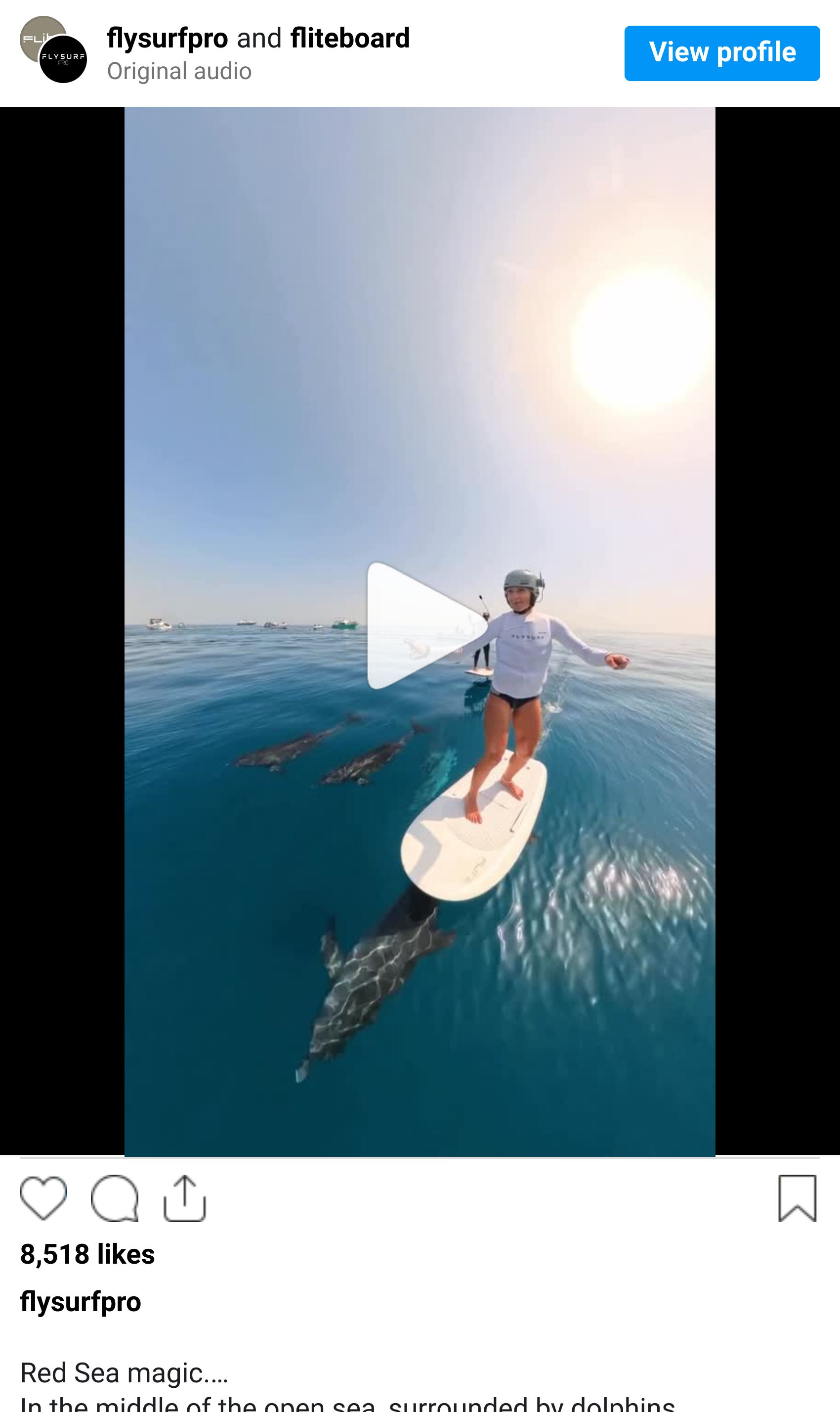
eFoiling with dolphins!
Join 2M+ Professionals Getting Ahead on AI

Keeping up with AI shouldn't feel like a second job.
But between the new tools, viral posts, and endless hot takes, most people spend hours every week trying to figure out what actually matters.
The Rundown AI fixes that.
It's a free newsletter that gives you the AI news, tools, and tutorials you actually need to know. All in just 5 minutes a day.
Over 2M professionals at companies like Apple, Google, and NASA already read it every morning to stay ahead.
Plus, if you complete the quiz after signing up, they'll recommend the best tools, guides, and courses for your specific job and needs.
If you are finding this newsletter interesting or valuable, please help us by sharing this on social media and/or forwarding the registration link to a friend or colleague.
