As we close out 2025, the industry is shifting its focus from "can we build it?" to "how do we scale it?" This week’s highlight that transition perfectly.
Issue 115.
Not a subscriber? Join here for free.
🖌️ Vision Marine Secures Flagship "Electric Marina" in Florida
In a major move toward vertical integration, Vision Marine Technologies (NASDAQ: VMAR) announced this week that its Nautical Ventures division has secured a commercial lease with a purchase option for the Anglers Avenue Marine Center in Dania Beach, Florida. The facility, located at a strategic point in the Fort Lauderdale boating corridor, is set to become a dedicated hub for high-performance electric boating.
Currently featuring 109 wet slips, the property will undergo a significant expansion to accommodate approximately 300 vessels, including a new dry-stack storage system tailored for electric hulls. Vision Marine CEO Alexandre Mongeon described the acquisition as a "pivotal step" in creating a modern, automotive-style retail and service experience. The site will serve as a showroom for the company’s E-Motion™ powertrain and a testing ground for rapid-charging infrastructure, addressing the critical shortage of specialized service centers for high-voltage marine systems in the Southeast US.
Read the full story: Link
⚓️ London Launches First Fully Electric Ferry: The "Orbit Clipper"
London’s river transport network took a historic step toward decarbonization this Wednesday with the official launch of the Orbit Clipper, the capital’s first fully electric, zero-emission passenger ferry. Operated by Uber Boat by Thames Clippers, the vessel has entered service on the high-frequency shuttle route between Rotherhithe and Canary Wharf, a critical commuter artery.
Designed by Aus Ships and built by the Wight Shipyard Company, the Orbit Clipper utilizes an advanced lightweight aluminum hull and is powered by a massive 960 kWh battery system supplied by EST-Floattech. The ferry can carry 150 passengers and, notably, features expanded capacity for 100 bicycles, encouraging a multi-modal green commute. The launch also highlighted a partnership with Aqua superPower, which has installed the high-speed shore charging network necessary to keep the vessel running on its rigorous 10-minute departure schedule.
Read the full story: Link
🌊 Brunswick patent targets structure-borne noise in electric drives
Electric propulsion removes combustion noise. It also exposes higher-frequency gear whine and structure-borne vibrations that travel through a drive leg into the hull. Brunswick’s latest U.S. patent addresses that path directly.
On 2025-11-04, the USPTO issued US 12,459,625, “Marine drives having noise and vibration isolating joint.” The assignee is Brunswick Corporation. The invention places an isolating connector assembly between housing sections so that vibrations from the motor housing pass through an elastomer before reaching the frame or extension leg. A compression limiter controls clamp load during assembly, protecting the elastomer from deformation that would reduce isolation performance.
The patent language is clear on intent: limit transfer of vibration between a first housing portion and a second housing portion by interposing a shaped elastomeric member. The limiter defines the maximum crush under bolt preload, keeping the joint’s spring rate and damping consistent across builds and over service life. In practical terms, the joint reduces the structure-borne component that makes electric outboards sound “whiny” at certain RPMs.
The assembly sits where the extension leg meets the motor housing in an electric marine drive. By decoupling these parts, designers can tune the transmissibility curve—lowering peaks in the audible range without compromising alignment. Because the limiter caps compression, technicians can follow standard torque specs without risking over-clamping the elastomer. That’s useful for factory builds and field service.
Brunswick has explored related solutions across its electric portfolio. Earlier filings combine corrosion protection with a vibration-dampening joint that routes all housing vibrations through an isolator before they reach the frame. Together, these disclosures show a systematic effort to control both acoustic and durability concerns as electric power levels rise.
For boaters, the impact is straightforward: less resonance transmitted into the transom and cockpit, especially at steady cruise where tonal components can fatigue crews. For builders, an integrated isolator can simplify mount strategies and reduce the need for secondary pads or composites in the transom structure. The approach preserves the compact profile demanded by today’s sleek electric housings.
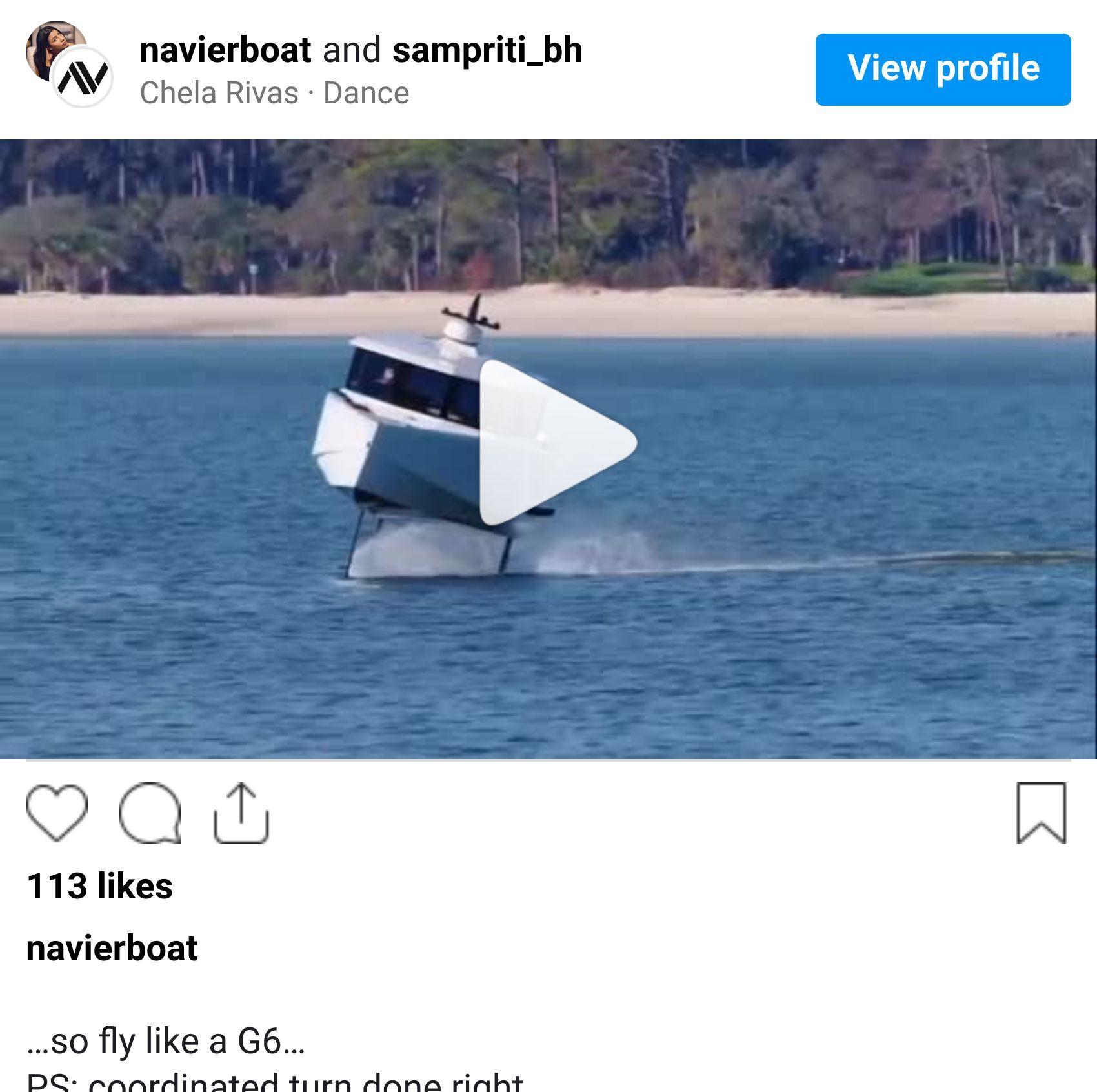
🌊 Social Media Post of the Week
Carving a right turn on foils!
📅 Weekly Scan
Incat powers up the world’s largest battery-electric ship | 2025-12-14 | Tasmanian Times | Confirms megawatt-scale electric ferries are moving from concept to service readiness on major routes. | Link.
Candela P-12 hydrofoil ferry begins Trondheim trial Dec 17 | 2025-12-12 | Candela (press room) | Demonstrates fast, energy-efficient electric commuter service on a regional route with challenging waters. | Link.
Blade Outboards to debut HALO 3/6 electric outboards at boot Düsseldorf 2026 | 2025-12-12 | boot Düsseldorf (exhibitor PR) | Signals more electric propulsion choices at Europe’s largest winter boat show next month. | Link.
YachtBuyer updates boot Düsseldorf 2026 attending yachts list | 2025-12-11 | YachtBuyer | Useful planning update for buyers scouting electric-ready models and auxiliaries at the show. | Link.
