Not a subscriber? Join here for free.
⚙️ Navier Generalized Marine Vessel Platform
Navier is using a recent LinkedIn post and video from founder and CEO Sampriti Bhattacharyya to make a larger point than a single boat reveal. The company’s Generalized Marine Vessel Platform, or GMVP, is presented as a standardized, scalable marine architecture with interchangeable mission layers, starting with Quanta, a 30-foot hybrid-electric vessel Navier says is designed for 2,000 nautical miles of range at speed. In the post, Bhattacharyya also claims roughly five times the range of a similar-sized monohull and about 80% lower energy cost per mile.
A key takeaway is that electric marine technology is being pushed beyond the usual recreation story. Navier’s public doctrine says pure electric fits coastal use, while hybrid is the path to longer-range work across defense, cargo, and other commercial missions. It frames electrification less as a clean-boating upgrade and more as a tool for cutting operating cost while extending endurance.
The post and video do not spell out Quanta’s full technical package, battery setup, or propulsion details. But Navier’s existing N30 offers a clue to the company’s approach: a 30-foot electric hydrofoiler with 70 nautical miles of range, twin 90 kW motors, 30-knot top speed, and DC fast charging in about 45 minutes. If Navier can carry that efficiency playbook into a reliable hybrid platform, Quanta could become one of the stronger examples yet of electric-boat engineering spilling into tougher marine use cases where fuel burn, range, and maintenance drive buying decisions.
The bigger signal is clear. In marine, efficiency is starting to be sold as capability. That is a strong adoption story for electric and hybrid boats alike.
Read the LinkedIn post, here.
🏄🏾♂️ Roxen Innovations - PWC
Roxen Innovations is pushing at a useful corner of electric marine: not the biggest, fastest, or most luxurious craft, but one of the clearest arguments for lightweight electric personal mobility on the water. The Swedish company says production of its Roxen electric personal watercraft begins in April 2026, with 200 units planned for the year and about 40 already spoken for through pre-orders. That is a small run in absolute terms, but it is enough to show there is paying demand for a lighter, easier-to-own electric craft rather than another heavy premium toy.
Roxen is aimed at buyers who want a personal watercraft that can be transported without the usual trailer-heavy, storage-heavy setup. Roxen says the hull weighs 60 kg, with a 33 kg swappable battery, for a ready-to-run weight of 93 kg. The company positions that as light enough for roof-rack transport, yacht tender garages, marina use, rental fleets, and short recreational rides from places where launching a conventional jet ski is a hassle.
Roxen lists a 22 kW electric motor, a 5.25 kWh swappable battery, top speed of 30 knots, cruising speed of 15 to 20 knots, about 75 minutes of normal use, range up to 20 nautical miles or 30 km, and a 2.5 to 3 hour charge time from a standard 230V outlet. The craft is CE-certified, and the company also highlights built-in 4G/LTE, app support, GPS geofencing, and over-the-air updates.

Source - Roxen Innovations website
That combination gives Roxen a sharper identity than many early electric PWCs. It is not trying to win a spec war with large gasoline jet skis on outright endurance or high-speed aggression. It is trying to shrink the ownership burden. A 5.25 kWh pack is modest by electric PWC standards, but that is also the point: smaller battery, lower weight, easier charging, easier transport, and less infrastructure dependence. For a rider using it as a cottage craft, harbour runabout, yacht toy, or short-session family machine, those tradeoffs may be easier to live with than the mass and charging demands of larger electric alternatives.
The April 2026 production start gives Roxen more weight than the usual prototype-stage electric watercraft story. A controlled first-year run of 200 units is not scale, but it is real manufacturing. The roughly 40 pre-orders suggest there is a market for electric watercraft built around portability and access, not just performance headlines. For electric boating, that is one of the more interesting adoption paths: products that remove storage, launching, and transport friction as much as they remove fuel.
Read more, here.
⚙️ E1 Race Series Team Update - Sierra Racing Club
So who is Sierra Racing Club? It is one of the newer teams on the 2026 E1 grid. E1 said Team Sierra is majority-owned by the Ozmen family and draws its name from Sierra Enterprises, the family holding company. The team’s identity is tied to Sierra Space, whose Dream Chaser spaceplane inspired the team’s launch livery. Kerem Ozmen is listed as the family principal, while Dominik Madani is a co-owner. On the sporting side, E1 lists Catie Munnings and Erik Stark as the team’s pilots.
This is not a consumer electric boat brand using racing for marketing. It is an aerospace-linked ownership group using E1 as a technology and visibility platform. E1 quoted Kerem Ozmen saying the championship offers a way to push electrification, accelerate research and development, and support commercial adoption in marine mobility. It suggests Sierra sees E1 less as hospitality and more as a testbed, even if the near-term gains are more likely to be in systems thinking, power management, lightweight structures, controls, telemetry, and public visibility than in direct transfer to mainstream recreational boats.
Courtois is participating through ownership and brand power, not as a pilot or technical builder. Reuters reported that he joined as a team co-owner through NXTPLAY Capital, adding one more global sports name to an E1 ownership roster that already includes Tom Brady, Rafael Nadal, LeBron James, and Will Smith. In practical terms, that means Sierra gains reach far beyond marine media. It can pull football audiences, sponsors, and investor attention into a racing series that still needs scale. For E1, that is valuable because attention is one of the hardest problems in electric boating. The technology may be interesting, but mass audiences tend to arrive through personalities, competition, and storylines first.
The bigger question is whether this helps electric boat adoption. Indirectly, yes. Directly, only to a point. E1’s RaceBird is a foiling electric raceboat built for a controlled championship environment, not for the realities of family boating, fishing, or workboat duty. E1 positions the series as a platform for marine innovation, reduced-emission racing, charging at venues, and broader awareness around clean marine technology and ocean protection. That can help normalize electric propulsion on the water and attract engineering talent, supply-chain partners, and infrastructure discussions. But it does not solve the core consumer barriers on its own: price, charging access, range under real load, marina readiness, and boat-owner confidence.
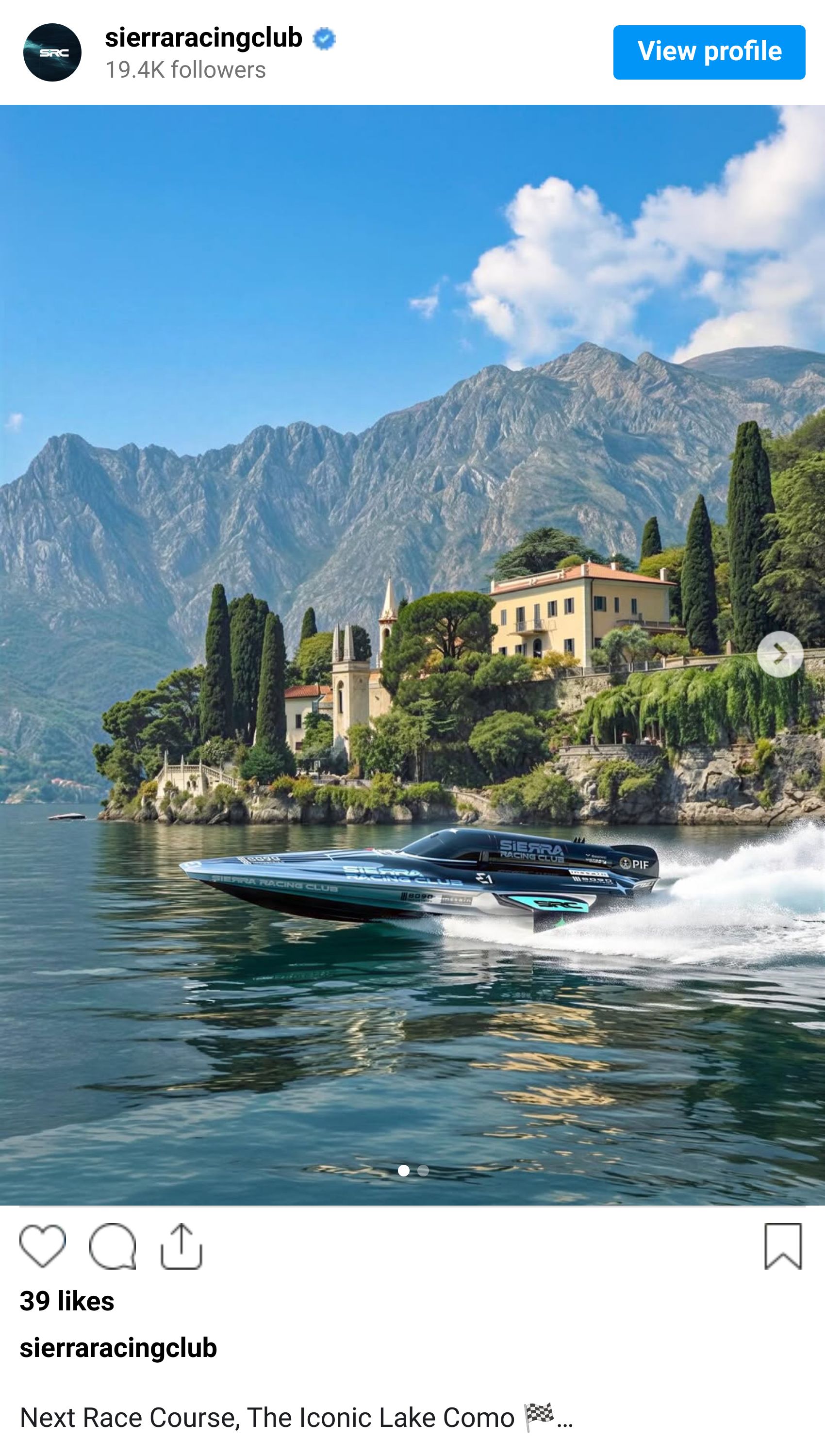
Still, Sierra Racing Club may be more important than a typical celebrity-backed entry because of the industrial logic behind it. If the Ozmen-led group treats E1 as a proving ground for electrification know-how and Courtois helps widen the audience through NXTPLAY and his own profile, Sierra could become one of the teams that pushes E1 beyond spectacle. That would not mean an immediate jump in electric boat sales. It would mean another layer of legitimacy for the sector: more serious capital, more technical credibility, and more reasons for mainstream audiences to pay attention to marine electrification before they are ready to buy into it. Sierra Racing Club is not building adoption at the dock today. It is helping build the attention, capital, and technical narrative that adoption will need.
Read more, here.
🖌️ eBoat Directory Listings - Water sport boats
Arc Sport - The Arc Sport is a high-performance electric wake boat featuring a 570 HP motor and a 226 kWh battery, designed to push the boundaries of electric watersports. Link
Genesis 24 - The Genesis 24 is a hybrid electric wake surf boat that combines a high-torque electric motor with an onboard generator for all-day riding without range anxiety. Link
Voltaic AEW24 - A high-performance electric wake boat built with a robust aluminum hull. The AEW24 features a massive 300kWh battery capacity and delivers up to 600HP for serious water sports enthusiasts. Link
🖌️ When Quiet Water Picks the Winner
The pattern is easiest to see on protected or tightly managed lakes. In Pennsylvania, regulators say current electric-motor-only rules were originally designed to reduce noise, excessive wakes, shoreline erosion, property damage, and petroleum-based water pollution. But the state is now revisiting those rules because higher-powered electric motors are arriving fast enough to challenge the original intent of “electric-only” waters. The commission has already clarified that on many electric-only lakes, electric boats must still operate at slow, no-wake speed. That is an important signal. Electric is no longer being treated as a small trolling-motor category. It is becoming a propulsion class that regulators now need to define with more precision.
For years, electric boating has had a hardware problem: limited range, higher upfront cost, and a fragmented dealer base. Quiet or eco-lake rules change the equation because they create places where electric is not just cleaner. It is the easiest legal answer. On waters where combustion is banned or tightly constrained, buyers do not have to be convinced to go electric on environmental grounds alone. They are choosing from the propulsion option that actually fits the lake. That can pull adoption forward in fishing boats, tenders, rental craft, club boats, and lakefront day boats long before large offshore recreation goes fully electric.
The United States already has many small examples of this logic in practice. New York’s Allen Lake is posted as “electric motors only.” At Pictured Rocks National Lakeshore, only electric motors may be used on Little Beaver Lake and Beaver Lake in the Beaver Basin Wilderness. Federal wildlife refuge rules also preserve electric-only access on some refuge lakes while prohibiting gas and diesel motors. These are not mass-market boating centers, but they show how regulators use propulsion rules to protect quiet, habitat, and low-impact recreation. Each such waterbody becomes a natural proving ground for electric craft.
Europe offers a stronger version of the same thesis because the rules are often broader, older, and tied to premium leisure waters. In Austria’s Salzkammergut region, the official tourism guidance for Mondsee and Irrsee says a motorboat ban for private individuals helps preserve the landscape, and points visitors toward electric boats or rowboats instead. At Attersee, official boating guidance says combustion-engine operation is prohibited at night, protection zones are closed during part of the year, and electric boats are granted limited operational accommodation when leaving the shore zone, provided they take the shortest route and stay below 10 km/h. That is exactly the kind of regulatory environment where the quiet, low-speed character of electric becomes a commercial advantage rather than a compromise.
Amsterdam points to what the next phase could look like. The city now requires emission-free boating on its inner waterways and restricts the central emission-free zone to electric boats, hydrogen boats, muscle-powered craft, and hybrids operating emission-free, while older petrol and diesel craft are being phased through temporary transition arrangements. Amsterdam is not an alpine lake, but it is one of Europe’s clearest policy signals: once waterways are managed for local air quality, urban livability, and low-impact boating, electric gains a structural edge. This kind of rule is easier for cities to implement on inland waters than in open coastal boating, which is one reason canals, lakes, and harbour districts may keep leading the transition.
There is also a wider European policy backdrop forming behind these local rules. The European zero-emission waterborne transport partnership frames the goal in broader terms: eliminate harmful environmental emissions from waterborne transport, including underwater noise, and support standards and policies that enable zero-emission solutions. That document is aimed at the full waterborne sector, not just small leisure boats. Still, it reinforces the direction of travel. In Europe, quiet and low-emission boating is moving from niche local practice toward a policy stack that includes technology, infrastructure, and future regulation.
For boatbuilders and propulsion companies, the business implication is straightforward. The first durable electric boating markets may not be the widest, fastest, or most glamorous waters. They may be lakes where people value silence, watersheds where fuel sheen is unacceptable, urban canals where exhaust is unwelcome, and managed shorelines where slow speed is the point. Those places favor electric boats that are simple, legal, and easy to charge overnight. They also favor products designed for day use rather than heroic range claims.
That is why noise-restricted and eco-lake regulation deserves more attention inside the marine industry. It creates a form of demand that is more dependable than hype. When a lake rewards quiet propulsion, electric stops being a statement and becomes the practical default. That may be one of the most important early adoption paths in electric marine.
🖌️ Social Media Post of the Week
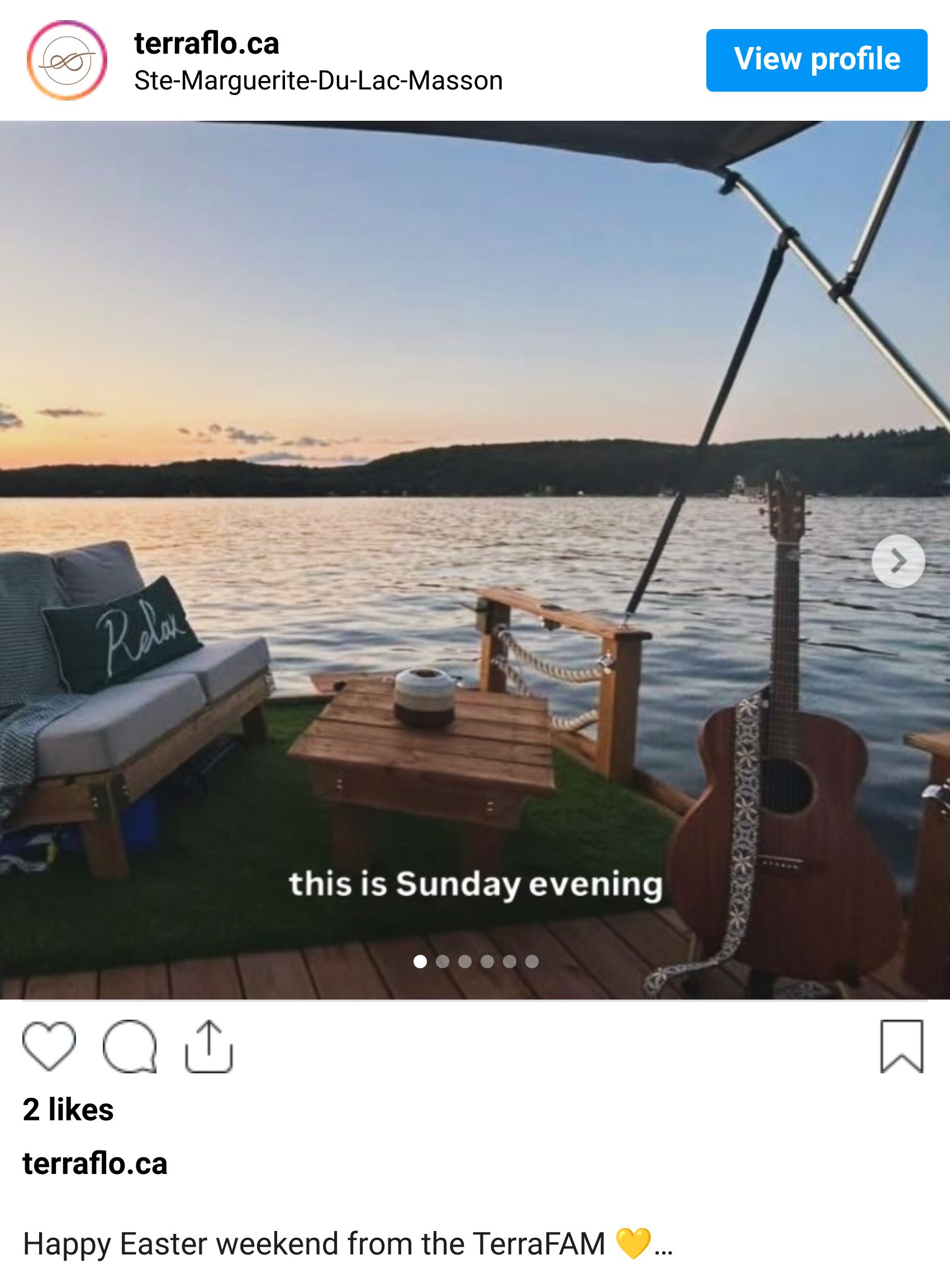
Terralfo making memories!
If you are finding this newsletter interesting or valuable, please help us by sharing this on social media and/or forwarding the registration link to a friend or colleague.
